Troubleshooting
Before you replace it, understand what's actually wrong.
When something isn't working, we help separate the symptoms from the actual problem.
Start a conversation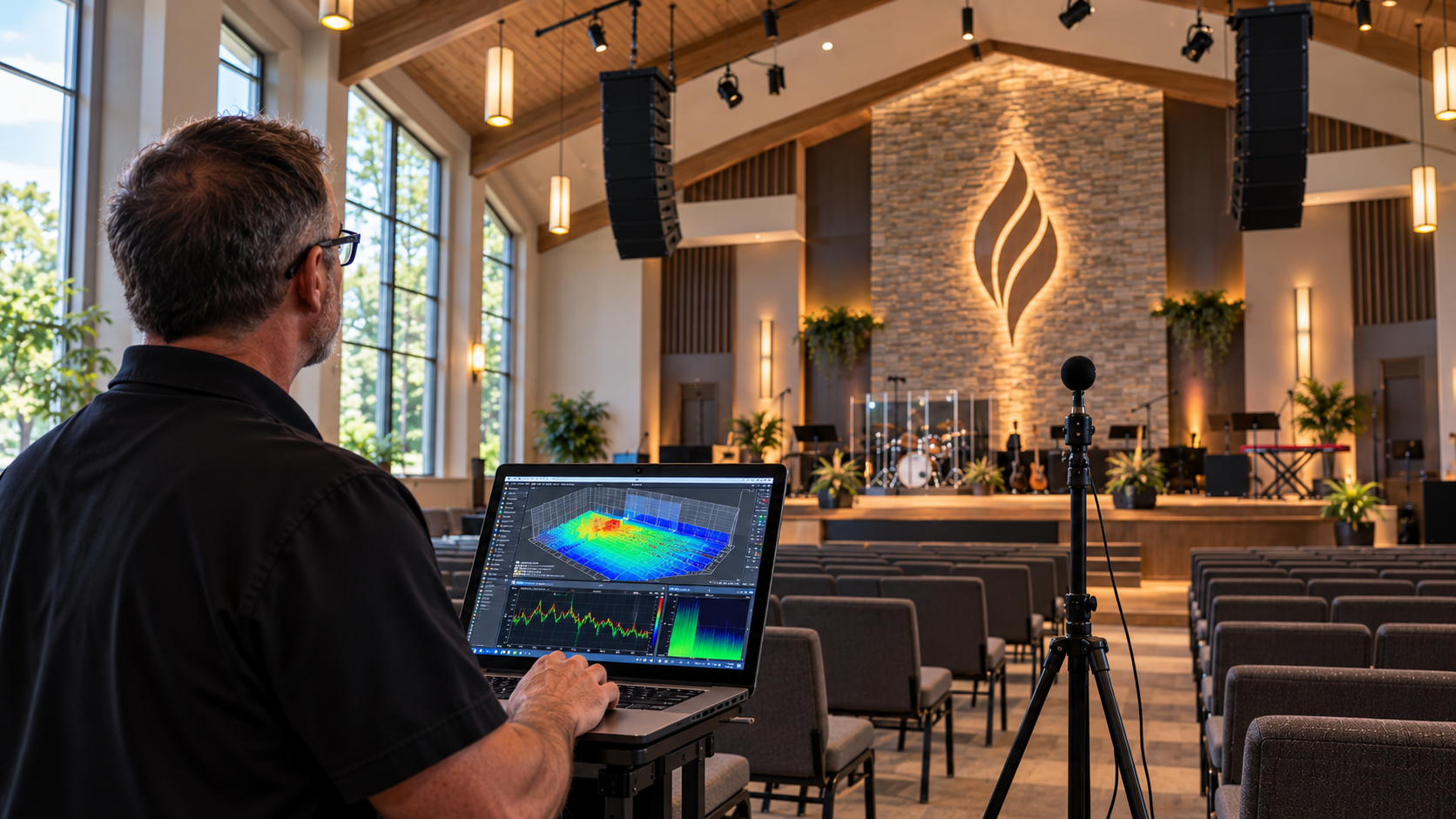
The symptom isn't always the problem.
Feedback might not mean you need new microphones.
Poor livestream audio might not mean you need a new mixer.
An unreliable system might be suffering from configuration, infrastructure or workflow rather than failed equipment.
Before recommending equipment, we look for the point where the problem actually begins.
Fix the cause—not just the symptom.
Troubleshoot before you spend.
We examine the system as it exists—signal flow, configuration, installation, acoustics, networking, infrastructure and how people actually use it. With your permission and appropriate access, we can often help remotely with computers, digital consoles, streaming and production systems, and other network-accessible equipment; some issues require on-site or specialist help.
When appropriate, we can go beyond listening and guessing. Audio modeling and measurement tools can help us see what the system is actually doing.
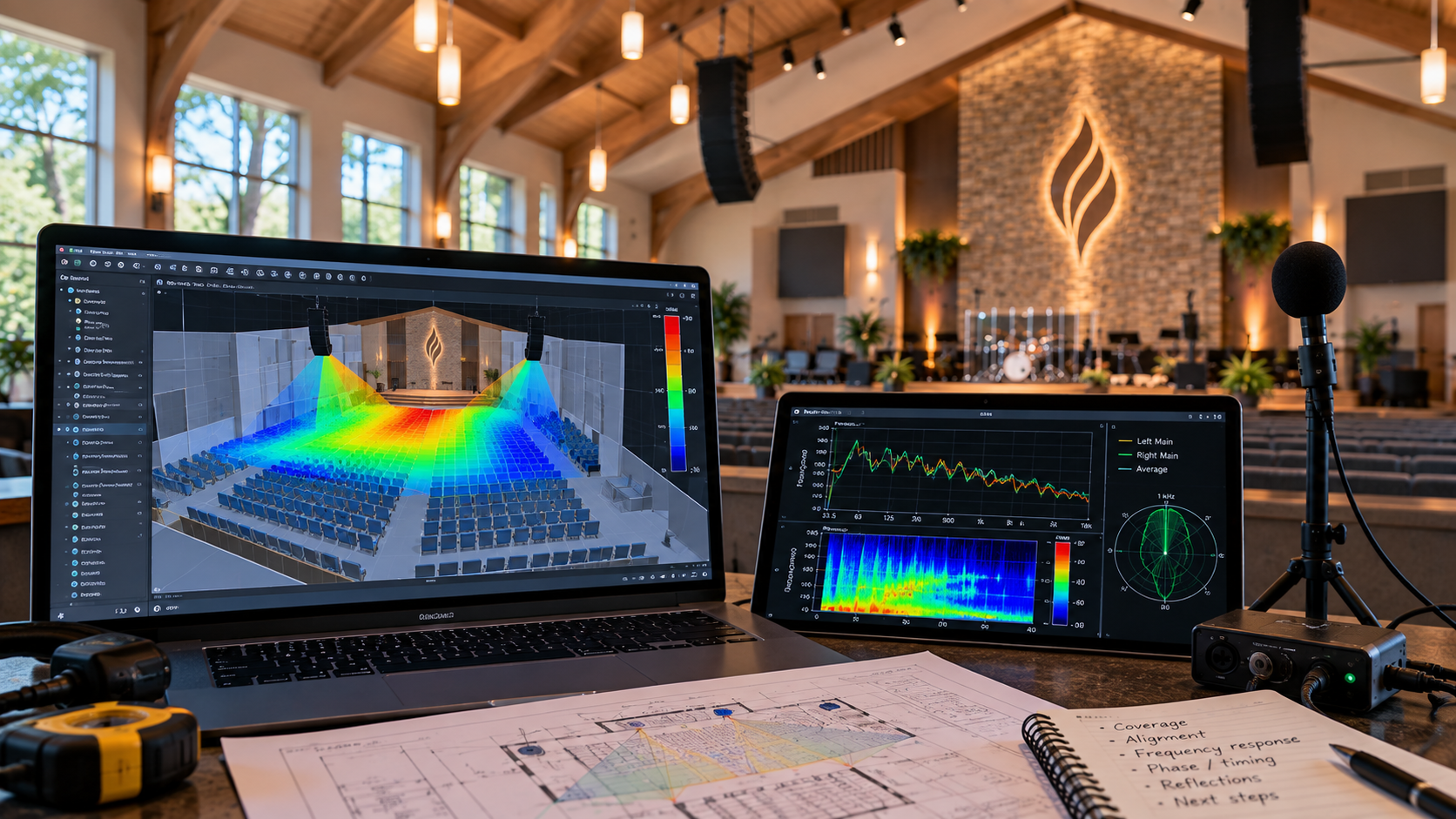
Loudspeaker modeling software such as EASE Focus 3 can help evaluate predicted coverage, aiming and interaction within the room.
Measurement platforms such as Open Sound Meter or Smaart can help evaluate real-world system behavior, including frequency response, timing and alignment.
The goal isn't to produce impressive graphs.It's to use better information to understand the problem.
What we see can change what you need.
Measurement, modeling and system investigation can reveal problems that aren't obvious from the equipment list alone.
Coverage, loudspeaker placement, timing, gain structure, signal routing, acoustics and system configuration can all affect what people hear.
Better information leads to better decisions.
Already have a proposal?Get another set of eyes on it.
A contractor proposal, equipment list or system design can represent a significant investment for a church.
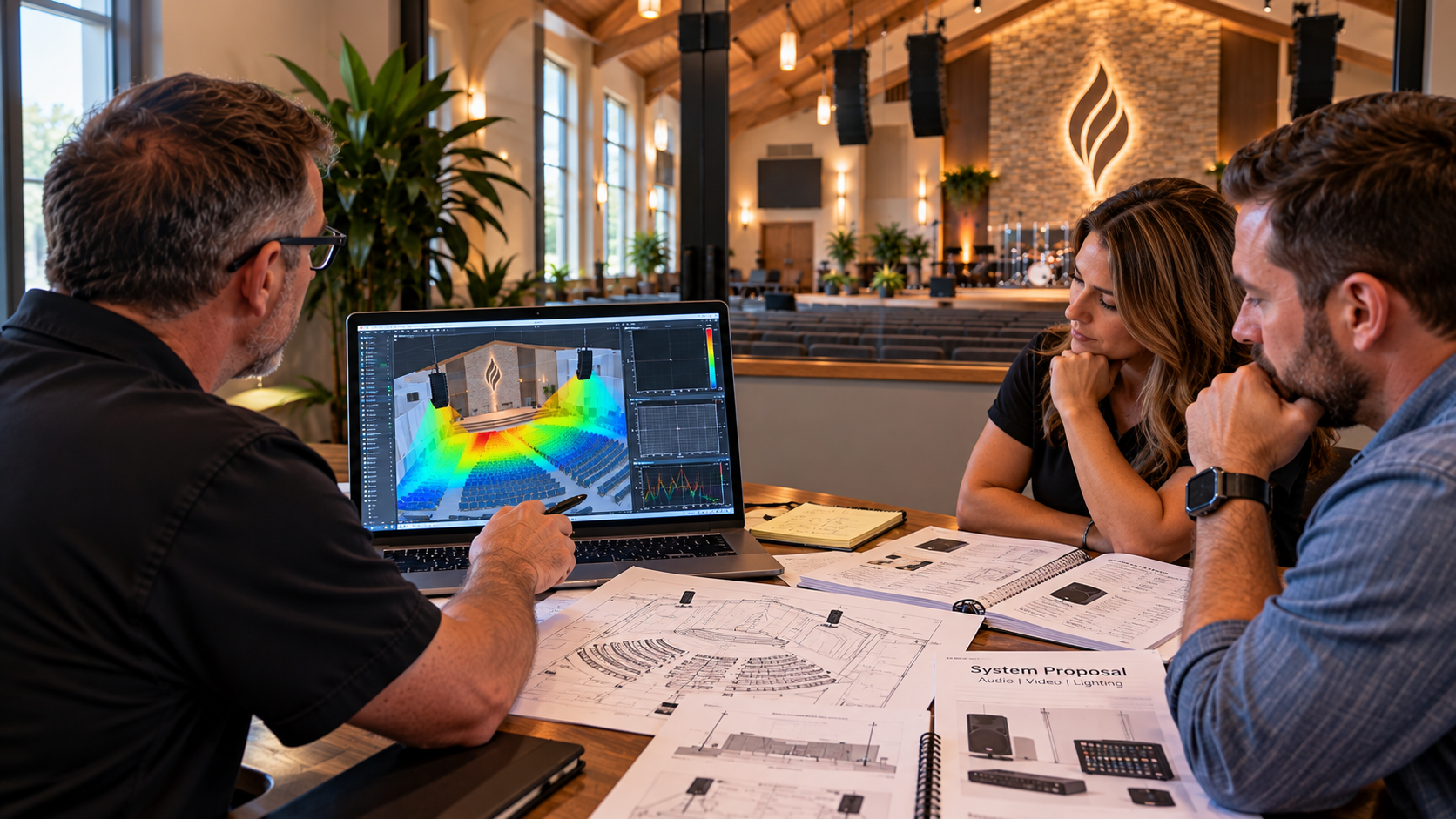
As part of Systems & Strategy, our independent proposal and design review can help you understand what is being proposed, what problem it's intended to solve, how the pieces fit together and what questions should be answered before you commit.
This is independent review—not an attempt to find something wrong with someone else's work.
Understand what you're buying—and why.
A bigger proposal isn't automatically a better solution.
Sometimes the proposed solution is appropriate.
Sometimes something important is missing.
Sometimes existing equipment can remain.
Sometimes the church needs a different approach.
Our job isn't to sell an alternative system. It's to help your church understand the proposed solution and make an informed decision.
Know what happens next.
Troubleshooting and review should lead somewhere practical.
Depending on the situation, that may mean identifying what appears to be causing the problem, determining what can be corrected, recognizing what equipment can remain, identifying what needs further investigation, or determining when specialized engineering, installation or other professional expertise is appropriate.
You should leave with a clearer understanding of the problem and the next decision in front of you.
Recommendations without an equipment sale attached.
Sanctuary Integration doesn't sell audio, video, lighting or streaming equipment.
That allows us to begin with your church, your existing system and the problem you're trying to solve.
When specialized engineering, installation or other expertise is required, we can help your church understand the need and work effectively with the appropriate professionals.
Make the next decision with better information.
You don't need to become a system designer. You should understand enough about the problem—and the proposed solution—to make an informed decision for your church.
Start a conversation